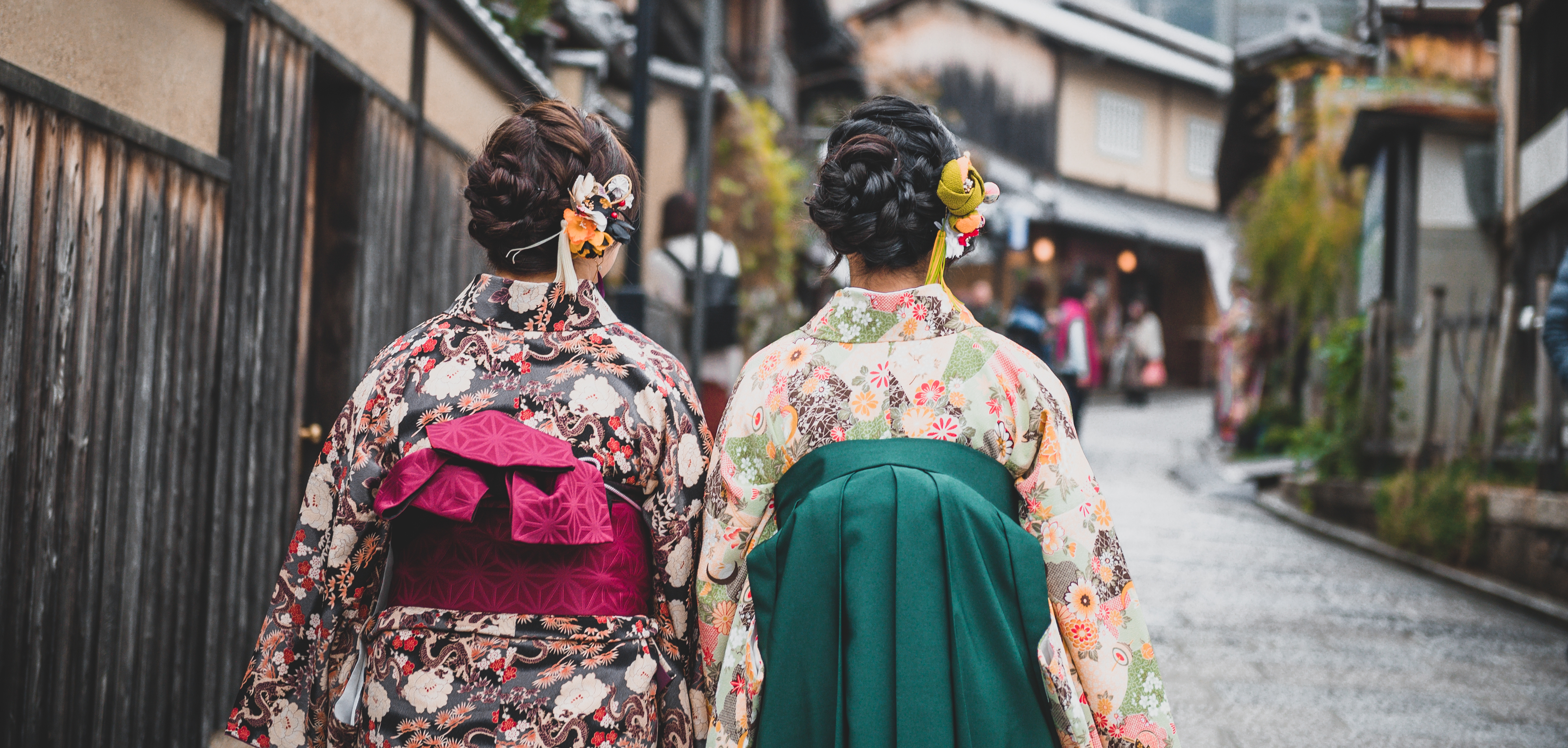
Japan is renowned for its polite and considerate culture based around tradition and courtesy. Enhance your visit by being mindful of these local customs.
Remove your shoes
It is common to remove your shoes before entering certain places, such as traditional ryokans, restaurants, and temples. Most places will have a small landing area at the entrance to remove your shoes, before stepping up onto the main level. So, if you see shoes neatly lined up at the entrance, follow suit and take off yours. Some places will provide slippers.
Speak quietly
In public spaces, including trains, restaurants, and temples, it’s customary to speak quietly. This contributes to the serene and calm atmosphere, even among the hustle of the city. You don’t need to be silent, but try to make your conversations unnoticeable to others.
Bowing etiquette
Bowing is a central part of Japanese etiquette and is used to show respect, gratitude, or apology. The proper way to bow is to bend at the waist (about 30-45 degrees) keeping your back straight and feet together. Men should keep hands at their sides, and women should have in front of their thighs. Excessive eye contact can be considered disrespectful, so make sure to look at the ground when bowing. Bowing beyond 45 degrees signifies profound honor, gratitude, or apology.
Chopstick etiquette
When dining, observe proper chopstick etiquette. Do not use them to point, pass food, or leave them sticking upright in a dish. Lay them across your plate or on a chopstick rest when not in use.
Slurping your noodles
In Japanese culture, it is not bad taste to slurp noodles! It actually expresses appreciation for the meal and enjoyment. Just don’t go overboard.
Avoid eating while on the go
While it might be common in some cultures to eat or drink while on the go, in Japan, food is meant to be enjoyed and savored. Whether you’re walking or using public transportation, it’s best to stop and enjoy your food or beverage before continuing on. If you are on the go, take a pause on the sidewalk or sit on a bench and enjoy some people watching.
Tattoo are still taboo
Tattoos are often associated with the Yakuza in Japan and may be frowned upon in certain onsens or temples. If you have visible tattoos, consider covering them up out of respect for local customs. Certain bathhouses and onsens are tattoo-friendly, so be sure to visit one of those if you have large tattoos or sleeves.
Understanding shrines and temples
Japan boasts a rich religious heritage of Shinto shrines and Buddhist temples. Be respectful when visiting these sites, and familiarize yourself with proper etiquette. Click here to read more on visiting Japanese shrines and temples.